
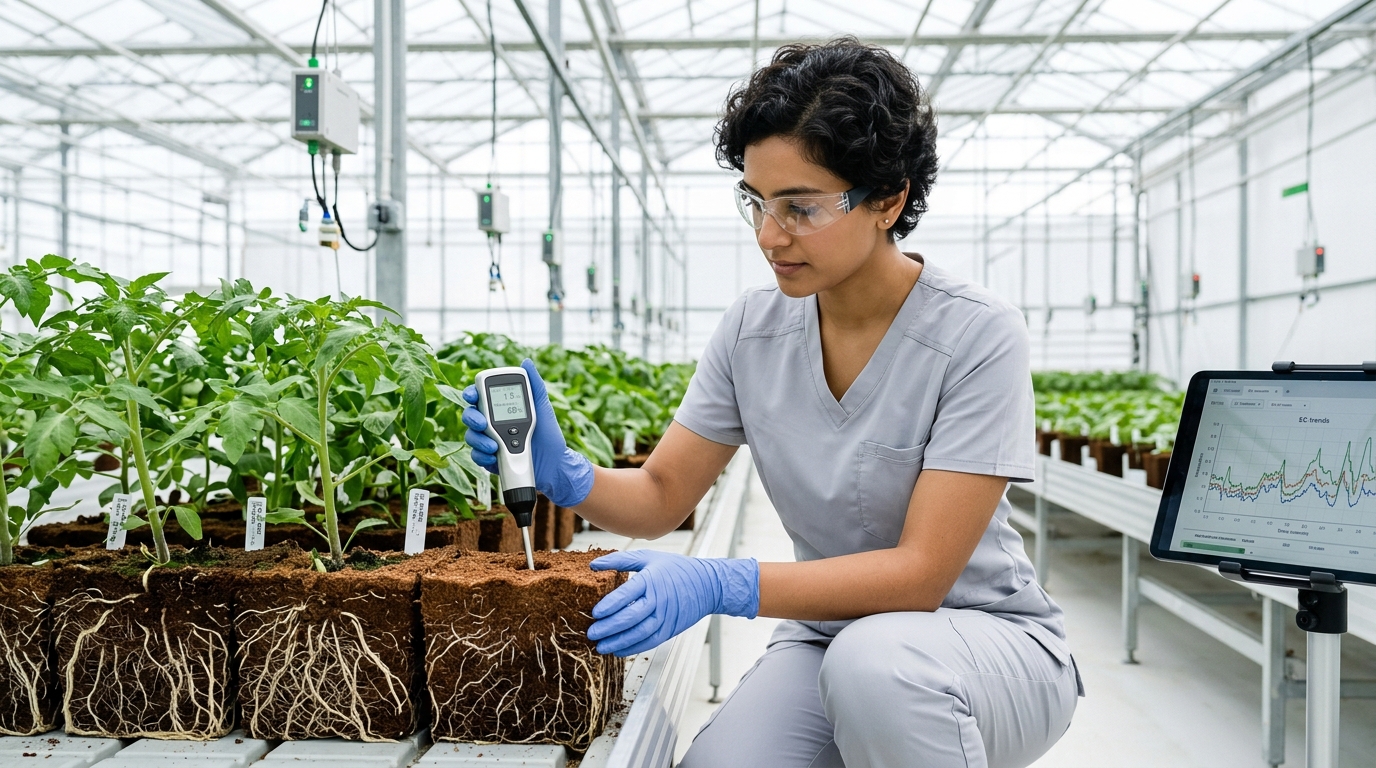
However, buying directly from an Indian factory requires more than just picking a supplier off Alibaba. To protect your crop yields and supply chain, you need a buyer's mindset focused on quality assurance, technical specifications, and logistics.
Here is a practical guide to navigating direct factory procurement of coco peat substrates.
1. Technical Specifications: Unwashed, Washed, or Buffered?
Not all coco peat is created equal. The raw pith from coconut husks contains naturally high levels of sodium (Na⁺) and potassium (K⁺), which can cause nutrient lockout if used directly in high-value hydroponic crops like tomatoes, berries, or cannabis.
When ordering directly from a factory, clarify the processing level required for your crop:
Unwashed (High EC)
Raw coir with high electrical conductivity (EC >1.5mS/cm). Typically used for animal bedding or non-sensitive landscaping.
Washed (Low EC)
Rinsed with fresh water to lower the EC (typically <0.5mS/cm). Suitable for general nursery mix and potting soils.
Buffered (Calcium Nitrated)
Treated with a calcium nitrate solution to bond calcium to the complex sites, flushing out sodium and potassium. Critical for commercial hydroponics where precise fertigation is mandatory.
Buyer Tip:
Request an independent lab analysis (such as a 1:1.5 or SMAX extraction test) for EC, pH, and sodium levels before finalizing any batch.
2. Managing Physical Properties: Expansion Ratio & Blend Ratios
Coco peat is shipped in compressed forms (5kg blocks, 650g bricks, or compressed grow bags/slabs) to maximize shipping container space.
Key physical metrics to negotiate with the factory include:
- Expansion Yield: High-quality 5kg blocks should yield between 70 to 75 liters of decompressed volume per block.
- Coir-to-Chips Ratio: For hydroponic grow bags, you will need to specify the blend. A common mix is 70% coco peat / 30% husk chips or 50/50 to optimize aeration, water retention, and drainage for root systems.
- Sieve Mesh Size: Ensure the factory uses properly sieved pith to eliminate fine dust particles (<1mm), which cause compaction and poor drainage over time.
3. Factory Vetting & Production Standards
When dealing directly with Indian manufacturers, verifying production capabilities prevents costly shipment delays:
1. Drying Capability
Indian coir processing relies heavily on sun-drying in open fields. During the monsoon seasons (June to September in the south, or October to December in Tamil Nadu), drying can stall production. Ask if the factory has mechanical drying facilities or sufficient covered yards.
2. Water Source
Washing coir requires millions of liters of fresh water. Confirm that the factory uses clean, low-EC water sources for rinsing rather than brackish groundwater.
3. Certifications
Look for manufacturers certified under OMRI (for organic production), RHP (Dutch quality mark for substrate), or ISO 9001.
4. Freight, Packaging & Logistics
Logistics can make or break the unit economics of imported substrate.
Palletized vs. Naked Loading
- Palletized: Shrink-wrapped on wooden or plastic pallets. Easier to unload with a forklift at your destination warehouse, but reduces total weight per container.
- Naked / Floor-Loaded: Maximize container weight (up to 24–26 metric tons per 40ft High Cube container), reducing freight costs per unit, but increases manual labor during unloading.
UV Protection for Grow Bags
If buying pre-packed open-top grow bags or slabs, ensure the poly bags are UV-stabilized (minimum 2 to 3 years rating) to prevent degradation inside commercial greenhouses.
The Bottom Line
Buying direct from Indian coir factories yields substantial cost savings and custom substrate formulation—provided you maintain strict quality control standards. Always start with pre-shipment sample testing, issue purchase orders with explicit EC/pH and expansion bounds, and build lead times around India's seasonal weather patterns.